|
|
 |
|
|
|
|
|
 |
재고수량이 0으로 표시되어있지 않은 용량값들은 저희가 재고를 보유하고있는 용량들입니다..주문즉시 발송됩니다
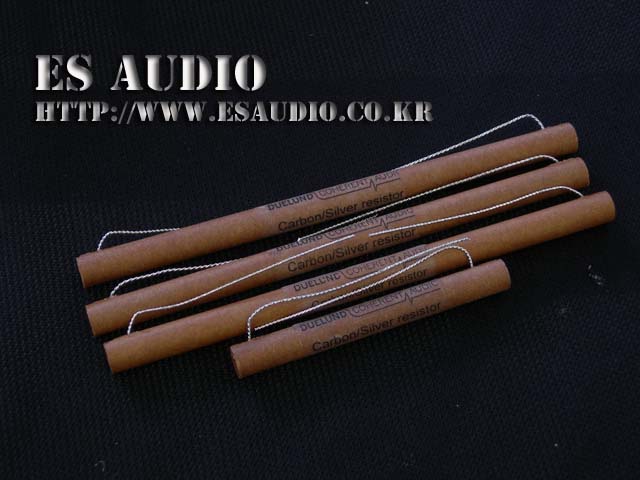
Duelund는 초하이엔드 콘덴서와 인덕터 저항등을 생산해내는 업체로 현존하는 초하이엔드 스피커에 적용되고 있습니다
Gryphon Poseidon
Peak Consult Dragon
PBN Audio The Montana Master Refer
Tidal T1
등의 1억대가 넘는 초하이엔드 스피커 완성품에 Duelund사의 부품들로 패시브 네트웍이 구성되어졌으며 현재 다수의 하이엔드 스피커들에 채택되고 있는 중입니다..
Made In Denmark제품입니다
아래의 글은 외국리뷰에서 각 저항에 대한 점수를 부여했습니다..(아래 Duelund Resistor점수는 본제품보다 상위버젼인 Cast Resistor로 테스트한 점수입니다)
번역글은 준비되는데로 올려드리도록 하겠습니다
Caddock MP821: 53%
The MP821 delivered an above average sound with
positive dynamic expression detail and transparency,
but was held back by a degree of added brightness
which emphasised any sibilance and treble distortion, if
present. It sounded a little ‘busy’, leading to a divided
opinion.
CGS Meggitt: 46%
This resistor had a characteristic ceramic wire-wound
sound, with roughness, brightness and grit, but also
showed better clarity and rhythm than is usual for the
type (perhaps the consequence of a mild increase in
loudness).
Duelund CAST: 79%
“Did not sound like a resistor”, the CAST sounded
neutral, transparent, free from audible distortion or
emphasis, with excellent clarity and detail, good plus
dynamics, and very good rhythm. The non-CAST
construction Duelunds at half the price will clearly be
also worth trying despite (or because of ) their negative
temperature coefficient, which is claimed to compensate
to some degree for medium term compression due to
voice coil heating. (For this to work properly, the two
time constants would need to be matched, which seems
unlikely.)
KNP (WW): 45%
The sound is reasonably well balanced, with some
‘wiry’ and boxy coloration, slower bass, and moderate
sibilance excess. It’s a typical industry result.
Monacor Ceramic (WW): 40%
The Monacor Ceramic had poorer depth, dynamics
and detail than average plus some sibilant emphasis,
and generally seemed less involving and musically
interesting.
Mundorf MResist SUPREME
(bi-filar WW): 64%
Mundorf ’s MResist SUPREME showed some extra
brilliance and slight ‘ringing’, but dynamics and clarity
were well preserved, nicely expressive and transparent,
with low subjective distortion, and above average
rhythmic integrity.
Mundorf MOX 10W: 51%
This resistor gave a well balanced performance: not
objectionable, if a little bland musically, but with good
neutrality and image depth.
Mundorf MOX 5W: 60%
This 5W MOX resistor sounded rather like the 10W
version, but was clearly more interesting and involving
musically, more open and transparent, and with better
subjective rhythmic performance. Perversely, science
would tend to predict the reverse in this comparison.
Mundorf WW ceramic 25W: 43 %
(mid only test)
The sound here was not so relaxed with some added
moderate sibilance, loss of clarity and focus, with
rougher treble sounds.
Vishay Sfernice RCH25 series : 42%
This Vishay is a mysterious sounding design. It’s quite
neutral and accurate, but lacks dynamics and interest, so
it’s inexplicably rather bland and uninvolving, leading
to poorer sense of rhythm and a loss of transparency.
Welwyn W24 : 36%
This well established vitreous coated ‘oldie’ seems to
be betrayed by its copper-steel lead-outs, and has a
dulled, uninvolving sound that masks detail and impact,
resulting in a below average score.
CONCLUSIONS
While it’s true to say that we were using a very high
quality test platform, the differences we heard were
greater than expected and led to clear preferences.
Duelund’s mythic reputation was upheld: its products
really do seem to provide the required attenuation
without significantly disturbing the music quality.
(Close tolerance to order.) While slightly coloured,
Mundorf ’s MResist also justified its reputation, this
high specification component holding musical values
essentially intact thanks to exceptional build quality.
One surprise was the higher ranking of the 5W
Mundorf MOX over their 10W example, but it was
also clear that these two were of different construction,
and both are very good value. The Caddock MP series
film sounded familiar, as it should, and certainly had
hi-fi credentials, but was not the test favourite. Close
tolerance values are available for this precision resistor.
Industry generic ceramic wire-wounds do the job
but are unremarkable, with some added subjective
distortions, while the Welwyn W24 warhorse no
longer figures. Found to be rather self-effacing, Vishay’s
Sfernice oxide film type was quite neutral but musically
rather bland.
|
|
|
 |
|
|
|